
Why Your Garage Door Won’t Close in Spokane — And What to Check First
A garage door that won’t close in Spokane is most often caused by a frozen bottom seal welded to the concrete slab during cold months, or misaligned safety sensors during warmer weather. The correct first check depends entirely on the temperature: below freezing, inspect the door’s bottom edge and apron for ice before touching any sensor. Call (844) 656-2094 for same-day diagnosis — estimates are free, and we’ll tell you what’s actually wrong before any work begins.
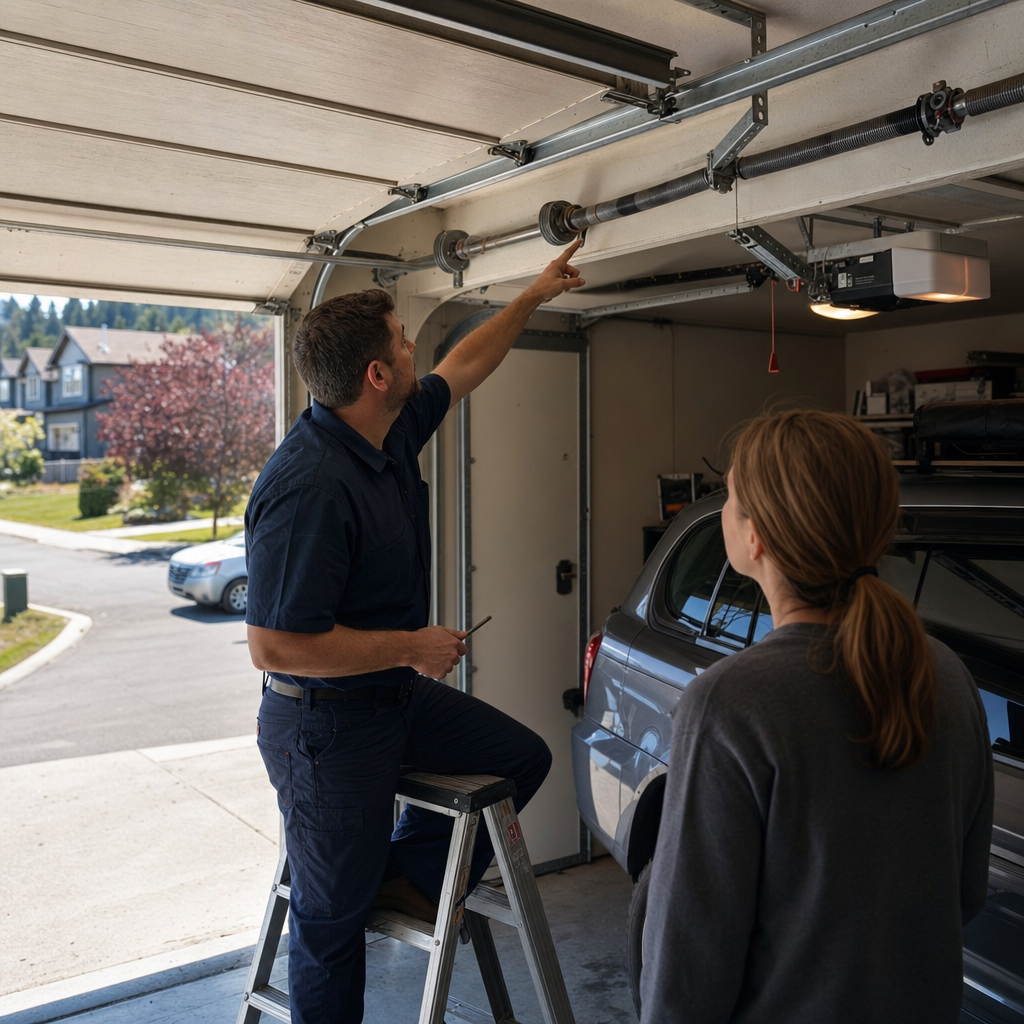
We’ve been fixing this exact scenario across Spokane for 17 years, and the pattern is so reliable that we can almost predict the call volume by the thermometer. The morning after the first hard freeze of November — typically following one of those wet Octobers we get — our phones light up with homeowners who’ve already spent twenty minutes wiggling sensors that were never the problem. In Spokane’s continental climate, where overnight lows regularly plunge below zero and 45-plus inches of annual snow pack down against garage aprons, ice bonding is the dominant failure mode for “door opens fine, won’t close” from late fall through early spring. That’s not a theory — it’s what Thomas Hernandez, our owner and lead technician, has documented across thousands of service calls in the greater Spokane area.
The Spokane Seasonal Diagnostic: Ice First, Sensors Second
Here’s the sequence Thomas uses on every “won’t close” call, and it’s saved Spokane homeowners from unnecessary sensor replacements, failed DIY attempts, and days of leaving their garage unsecured:
- At or below freezing: Check the bottom seal and concrete apron for ice before anything else. Look from outside — the rubber seal may have frozen to the slab overnight, then torn partially free when you opened the door this morning. A dragging, damaged seal creates enough resistance that the opener’s auto-reverse triggers, making the door travel partway down then stop or reverse.
- Above freezing: Check the safety sensors. One LED should be solid, the other may blink if misaligned. Clean lenses with a dry cloth — Spokane’s dusty summer roads and muddy spring runoff coat everything.
- Any temperature: Verify the manual lock isn’t engaged. The T-handle lock on older doors, common in South Hill and Shadle Park’s 1940s–1970s housing stock, gets flipped accidentally more often than people admit.
The bottom-seal freeze is so predictable here that experienced Spokane operators — ourselves included — pre-stock extra seal rubber and extend hours for the first week after the season’s initial hard freeze. We’ve replaced seals in Audubon at dawn and realigned tracks in Spokane Valley by lunch on those weeks. The freeze-thaw cycles unique to our high-desert climate, where shoulder-season nights swing 30–40 degrees, create conditions you simply don’t encounter in Seattle or Portland’s moderated marine climate.
What a Frozen or Torn Bottom Seal Actually Looks Like
From inside your garage, you might see the door sitting slightly crooked in the opening, or notice a gap of daylight along one corner. From outside — and this is the critical check — look for rubber hanging below the door’s bottom edge, or a seal that’s bunched, torn, or missing entirely from one section. The door may have closed partially on the torn seal, compressing it, then reversed when the opener detected the drag.
We’ve seen this exact failure in the older single-car garages common to South Hill and Shadle Park, where narrow openings and original concrete aprons from the 1950s–60s create perfect ice-bonding conditions. The concrete’s often unsealed, slightly pitched wrong, or cracked in ways that pool meltwater against the seal. Newer subdivisions off Highway 2 aren’t immune — their wider double-car openings just mean more linear feet of seal to freeze and potentially tear.
Safety note: A garage door that won’t close is an open security vulnerability, especially for detached garages storing tools, vehicles, or providing direct home access. In Spokane’s established neighborhoods where alley-access garages are common, an open door overnight invites problems beyond weather. This is when our emergency availability matters — not as a marketing bullet, but as a practical response to a genuine security exposure.
The Genie Opener Quirk We See Regularly
Older Genie models — pre-2015 screw-drive and chain-drive units still running in plenty of Spokane homes — carry a manual force-adjustment screw that gets knocked out of spec during hard-close events. The scenario plays out like this: the door hits ice resistance, the motor strains, and the force limit creeps down. Next morning, the door “won’t close” because the opener no longer generates enough force to push past even light seal drag, let alone actual obstruction.
It’s a five-minute recalibration if you know the screw location and the manufacturer’s spec. It’s a frustrating repeat failure if you don’t. Thomas carries the torque-limiter settings for Genie models back to the late 1990s in his field notes, along with equivalent specs for LiftMaster and Chamberlain units. “Tell me what it’s doing, and I’ll tell you what it needs” — that’s how we approach every call, whether it’s a simple adjustment or a full opener replacement.
When the Sensors Are Actually the Problem
We don’t dismiss sensors — they’re the second-most-common cause in Spokane’s warmer months, and the primary cause anywhere the temperature stays above freezing. The photo-eye pair sits four to six inches off the floor, perfectly positioned to catch kicked gravel from Spokane’s unpaved alleys, spring runoff splatter, and the fine caliche dust that blows through the Basin every August.
One sensor shows a solid LED, the other blinks or stays dark when misaligned. Before you start loosening brackets, try this: clean both lenses with a dry microfiber cloth, then check if anything’s bumped the bracket — a garbage can, a bike tire, a snow shovel leaned against the wall. If the LEDs don’t match after cleaning, the bracket needs physical adjustment. If they match but the door still won’t close, the wiring between sensor and opener head may be compromised — we’ve found rodent damage in rural Spokane Valley outbuildings and freeze-cracked insulation in unheated North Side garages.
Safe Troubleshooting You Can Do — And What Requires a Technician
We’re not going to walk you through adjusting torsion springs or recalibrating opener force limits from a web page. Those tasks carry genuine injury risk — a garage door spring stores enough energy to cause serious harm, and incorrect force settings can damage the door or create a crushing hazard. Here’s where the line sits:
| What You Can Safely Check | What We Recommend Calling For |
|---|---|
| Visual ice inspection on bottom seal and apron | Spring, cable, or drum inspection |
| Sensor LED status and lens cleaning | Opener force-limit recalibration |
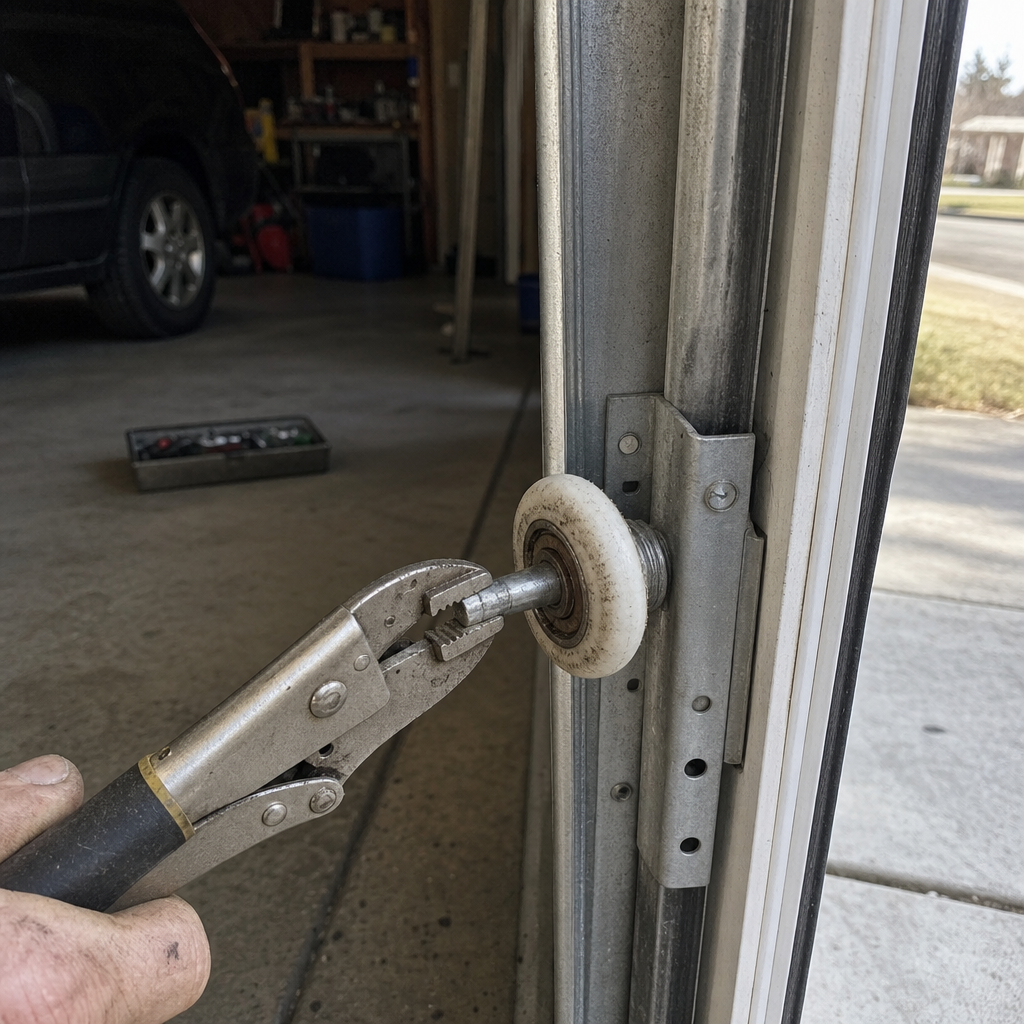
| Manual lock engagement verification | Track realignment or roller replacement |
| Obvious obstruction removal (snow, debris) | Electrical diagnosis or wiring repair |
If you’ve cleared ice, verified sensors, and checked the lock, and the door still won’t close, the problem’s likely in the mechanical or electrical systems that require trained diagnosis. Our Garage Door Repair covers the full range — from spring and cable work to opener replacement and track realignment.
What “Garage Door Won’t Close” Repairs Cost in Spokane
Pricing depends on what we find, and we’ll tell you the exact cost before any work starts. Based on our 17 years of service across the greater Spokane area, here’s what homeowners typically see:
| Repair Type | Typical Range in Spokane |
|---|---|
| Sensor realignment or replacement | $120–$240 |
| Bottom seal replacement | $150–$280 |
| Opener repair (including force recalibration) | $120–$320 |
| Opener installation (if replacement needed) | $250–$550 |
| Track realignment | $120–$240 |
| Spring or cable repair (if underlying cause) | $180–$340 |
The overall range for garage door repair in Spokane runs $150–$600, with most “won’t close” diagnoses falling in the lower half once the actual cause is identified. We don’t charge for the call that determines what’s wrong — that’s information you need to make a decision, and charging for it would mean we’re not the kind of operation we claim to be.
Why the Correct First Check Saves You Money and Frustration
We’ve arrived at calls where the homeowner’s already purchased new sensors, watched three YouTube videos, and spent a Saturday afternoon on a ladder — only to have Thomas point out the torn seal hanging two inches below the door bottom. We’ve also seen the opposite: the seal looked fine, but a single ice crystal on the apron was enough to trigger auto-reverse on an opener whose force limit had crept down over years of use.
Spokane’s climate creates these layered failures. The extreme expansion-contraction cycles our torsion springs endure — from -10°F winter lows to 100°F-plus summer highs on South Hill’s sun-exposed driveways — measurably shorten component life compared to milder Pacific Coast markets. A door that worked fine in October may develop multiple interacting problems by January. The technician who recognizes that interaction, rather than treating each symptom in isolation, is the one who fixes it permanently.
That’s the difference 17 years of exclusive garage door focus makes. We’ve worked on LiftMaster, Chamberlain, Genie, Clopay, and the other major brands long enough to know their failure patterns, their design evolutions, and which “obsolete” parts can still be sourced. When Thomas arrives at your door, he’s not consulting a manual — he’s drawing on hands-on experience with the exact model you’re running, often in the exact neighborhood you live in.
FAQs
Most garage door won’t close repairs in Spokane cost between $120 and $320, with sensor realignments and seal replacements at the lower end and opener repairs toward the middle. The exact price depends on what’s actually wrong — ice-related seal damage typically runs $150–$280, while opener electrical issues can reach $320. Call (844) 656-2094 for a free estimate with no obligation.
Yes, we offer same-day and emergency garage door service for doors that won’t close, because an open garage is a security and weather exposure problem that shouldn’t wait. During the first hard freeze weeks of November, we extend hours to handle the predictable surge in ice-related calls. Call (844) 656-2094 to check current availability — we’ll give you an honest timeframe.
Repair is usually cheaper if the opener is under 10 years old and the issue is electrical or mechanical — typical repairs run $120–$320 versus $250–$550 for new opener installation. However, if the opener is pre-2010, uses discontinued parts, or has suffered motor damage from repeated strain against ice-bound doors, replacement is often the more reliable investment. We’ll tell you straight which path makes sense for your specific unit and usage.
A door that opens fine but won’t close almost always points to a safety-system issue or external resistance — the opener’s auto-reverse is engaging on the way down but not the way up. In Spokane’s cold months, check for ice bonding the bottom seal to the concrete slab first; in warmer weather, check that both safety sensor LEDs are solid and aligned. If neither resolves it, the opener’s force settings or internal electronics need professional diagnosis.
When You’re Ready for a Diagnosis You Can Trust
If you’d rather have it looked at than troubleshoot on your own, Titan Garage Door Service Greater Spokane offers a no-pressure assessment — Thomas Hernandez, our owner and lead technician, will diagnose the actual cause, explain it in plain language, and give you upfront pricing before any work begins. No upsell, no surprises, no charge for the call that tells you what’s wrong. Serving Spokane since 2007. Call (844) 656-2094.
Written by Thomas Hernandez, Owner & Lead Technician at Titan Garage Door Service Greater Spokane, serving Spokane, WA.